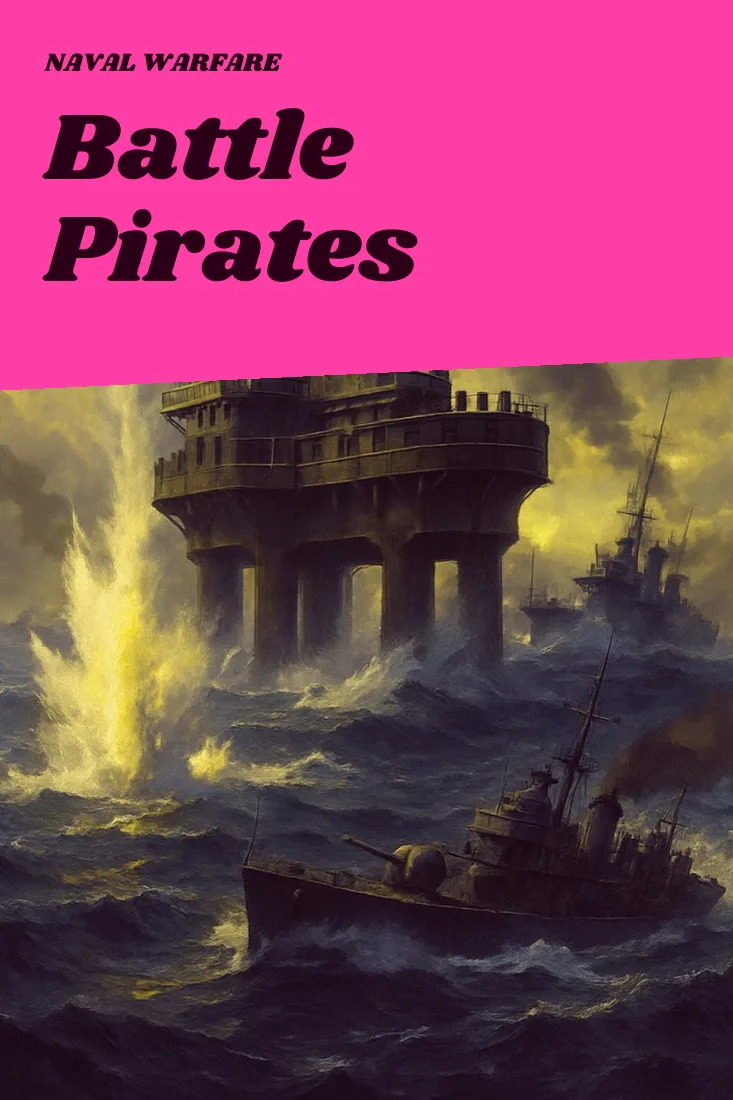
Battle Pirates comes from Kixeye, a studio that has made its home in Victoria, British Columbia, which gives this Canadian desk a small extra reason to pay attention. The game launched in 2011 and was later moved off Flash to WebGL, so it still plays in a desktop browser with nothing to install: the play button simply opens a login and drops you into your base.
The setting is a post-apocalyptic ocean in the year 2067, where survivors fight from floating bases across a shared map. You build warships, arrange them into fleets, and attack targets and other players, while defending your own base from raiders. It is less about steering in real time and more about the design and timing of your fleet. Think of it as naval engineering crossed with a long strategy campaign.
Designing a warship from the keel up
Ship design is the heart of Battle Pirates. You choose a hull, then fit it with weapons, armour and special components, balancing speed, range, durability and firepower. A fast raider and a slow, heavily armoured line ship are built from the same principles but feel nothing alike in combat. Experimenting with designs, and learning which combinations counter which targets, is where the game’s real depth lies.
The sheer number of hulls and parts accumulated over the game’s long life is both a delight and a barrier. Veterans talk in a shorthand that newcomers will not understand for weeks. We found it best to follow one simple design line early, learn why it works, and only then start reading community fleet guides that dissect the more exotic builds.
Raids across an ocean map
Once a fleet is ready, you send it across the ocean map to attack targets, from computer-controlled bases and fleets to other players’ outposts. Battles play out in real time, and you can direct ships during the fight, focusing fire and retreating damaged vessels. Repair time after a battle is a constant consideration, so planning when to attack matters as much as how.
The game’s calendar is driven by events and raids that run on fixed schedules. Kixeye’s own support notes show regular release updates and fresh raids, so there is always something on the horizon. Events reward the players who show up at the right times, which can be energizing or exhausting depending on your week. In our testing, choosing which events to skip was as important as playing the ones we joined.
Your floating fortress
At home, you build and arrange a floating base with defensive turrets and repair docks. Other players can raid it, so layout matters: well-placed defences protect your key structures and make attackers pay for every approach. Upgrading buildings takes time, and much of the early game is about deciding which improvement comes first.
Base defence gives the game a second, quieter layer. On days without time for raids, you can still improve your layout, queue upgrades and prepare fleets for the next event. Alliances add social structure, letting players coordinate attacks and share knowledge. Joining an active alliance early made our experience far richer and faster than playing alone.
Pace, patience and the timer problem
Battle Pirates runs on timers: building, upgrading and repairing all take real time. That suits players who check in several times a day, and Kixeye has noted that its players often do exactly that. But it makes the game hard to binge, and free players will feel the pace of upgrades more sharply at higher levels, which our fairness score reflects.
The interface also shows its age in places, with layered menus that assume you already know where everything lives. We would not call the game beginner-friendly. Still, for the right temperament, the slow build of a fleet and the satisfaction of a well-planned raid are rare pleasures that faster games cannot match.
Your first seven days in Battle Pirates
- Open the official page in a desktop browser, log in and follow the opening missions that explain your base and first ships.
- Queue a base upgrade every time you log off, so the timers work while you are away.
- Build one simple, reliable ship design and copy it across your first fleet before experimenting further.
- Attack computer-controlled targets near your base to learn repair times before tackling anything bigger.
- Join an active alliance by the weekend; its members will save you weeks of trial and error.
Where the armour holds
- Deep warship design with hulls, weapons, armour and components to balance.
- An events calendar that keeps the ocean map busy all year.
- Base layout gives quieter days something meaningful to do.
- Plays in a desktop browser with no download needed.
Where it rattles
- Timers make the game hard to play in long sessions.
- Upgrades slow considerably for free players at higher levels.
- Menus assume a veteran’s knowledge and overwhelm newcomers.
Who should report for duty in Battle Pirates
Battle Pirates suits planners: players who enjoy designing, scheduling and coordinating more than aiming. If you like checking in on a project several times a day and talking strategy with an alliance, it fits beautifully. If you want long sessions of uninterrupted action, it will frustrate you.
After-action report on Battle Pirates
Battle Pirates is a demanding but rewarding naval strategy game with remarkable staying power. Ship design is excellent, the event calendar keeps it lively, and base defence adds texture. Timers and a dated interface hold it back, and free players will feel the pace at higher levels, which is why it sits fifth. For patient admirals, it remains a fine browser campaign.